archived / Primary modder, 3D art, textures, animation, scripted behavior, Workshop publishing, community support
Ravenfield modding: Warhammer 40K
An archived Ravenfield modding retrospective about my unofficial Warhammer 40K work, Workshop releases, and Imperial Knight collaboration.
Ravenfield modding: Warhammer 40K was the first larger project I tried to organize for the Ravenfield scene as Lordaloa. It was an unofficial fan modding effort built around the idea that Ravenfield could host a broader Warhammer 40K sandbox instead of only isolated one-off weapons.
The main organizing point was the Warhammer 40K: Overhaul Collection on Steam Workshop. It gathered maps, weapons, vehicles, mutators, and skins into one place and gave the work a clear public shape. The page itself described the scope honestly: the collection tried to cover many parts of 40K, but the work was slow because only a small number of developers were actively pushing it forward.
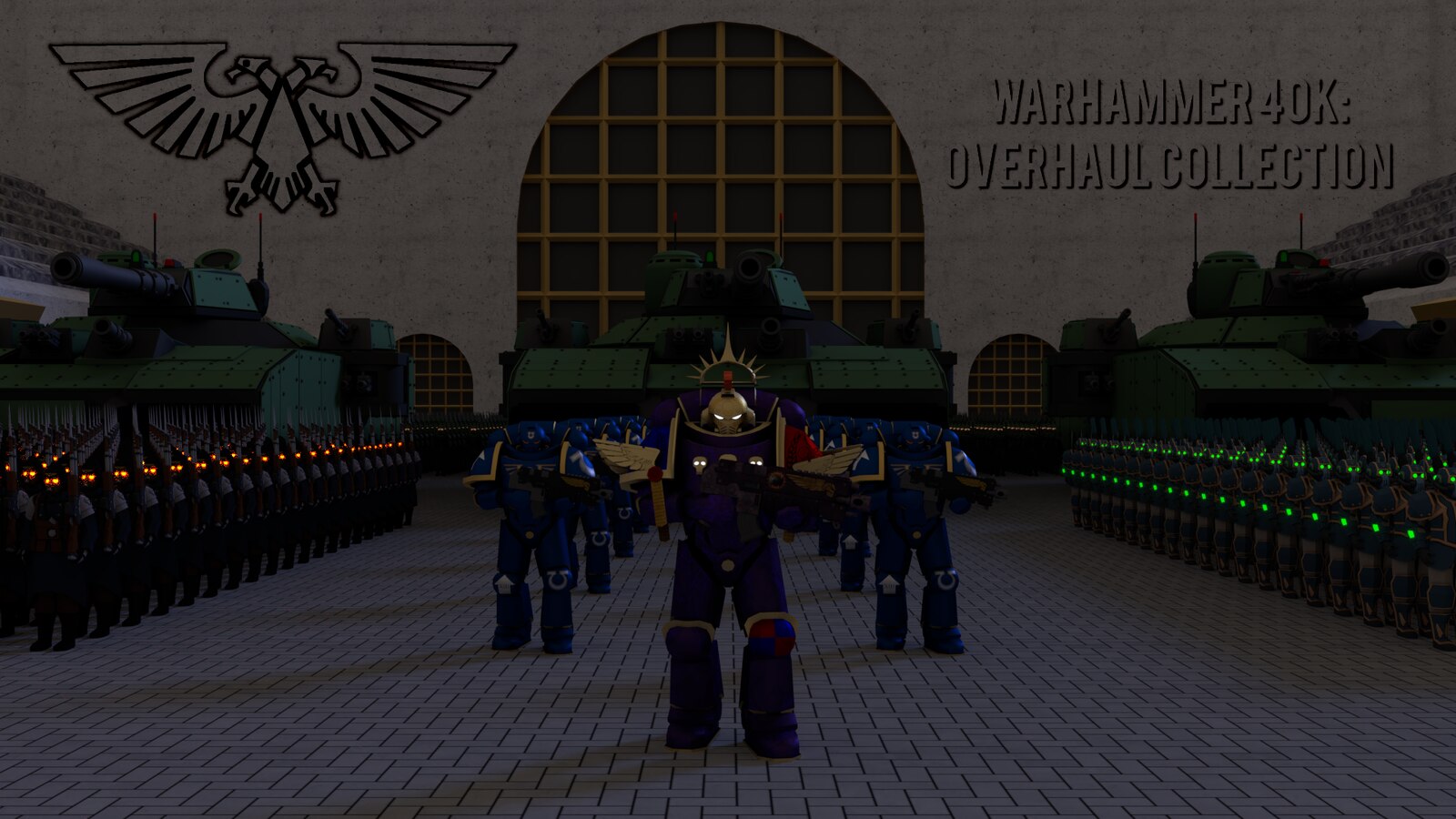
This was always fan work around Games Workshop’s setting. I treated it as a modding and production exercise: learning how to make recognizable sci-fi hardware work inside Ravenfield’s systems, how to publish content for a public audience, and how to keep a growing collection coherent enough for players to use.
Project goal
The goal was to build a usable 40K layer on top of Ravenfield. That meant more than exporting a single weapon model. A player needed enough content to create a battlefield: infantry skins, weapon packs, vehicles, mutators, maps, and collection pages that made the setup discoverable.
For me, the project became a first serious test of scale. I had to think about:
- how Workshop items fit together as a collection,
- how recognizable faction silhouettes survive Ravenfield’s low-poly and fast-combat style,
- how to keep old work separate from current work when files were lost or implementations became outdated,
- and how to respond to feedback from players who were using the content in unpredictable setups.
The legacy collection is part of that story. Older mods were moved out when they could no longer be maintained, were too outdated, or had newer replacements. That was not glamorous work, but it taught me that public content needs curation as much as it needs creation.
Direction and design choices
The 40K work forced me to balance fidelity with Ravenfield readability. I could not simply chase detail. Weapons had to read quickly in first person, vehicles had to behave inside Ravenfield maps, and skins had to be recognizable from a distance while still fitting the game’s visual limits.
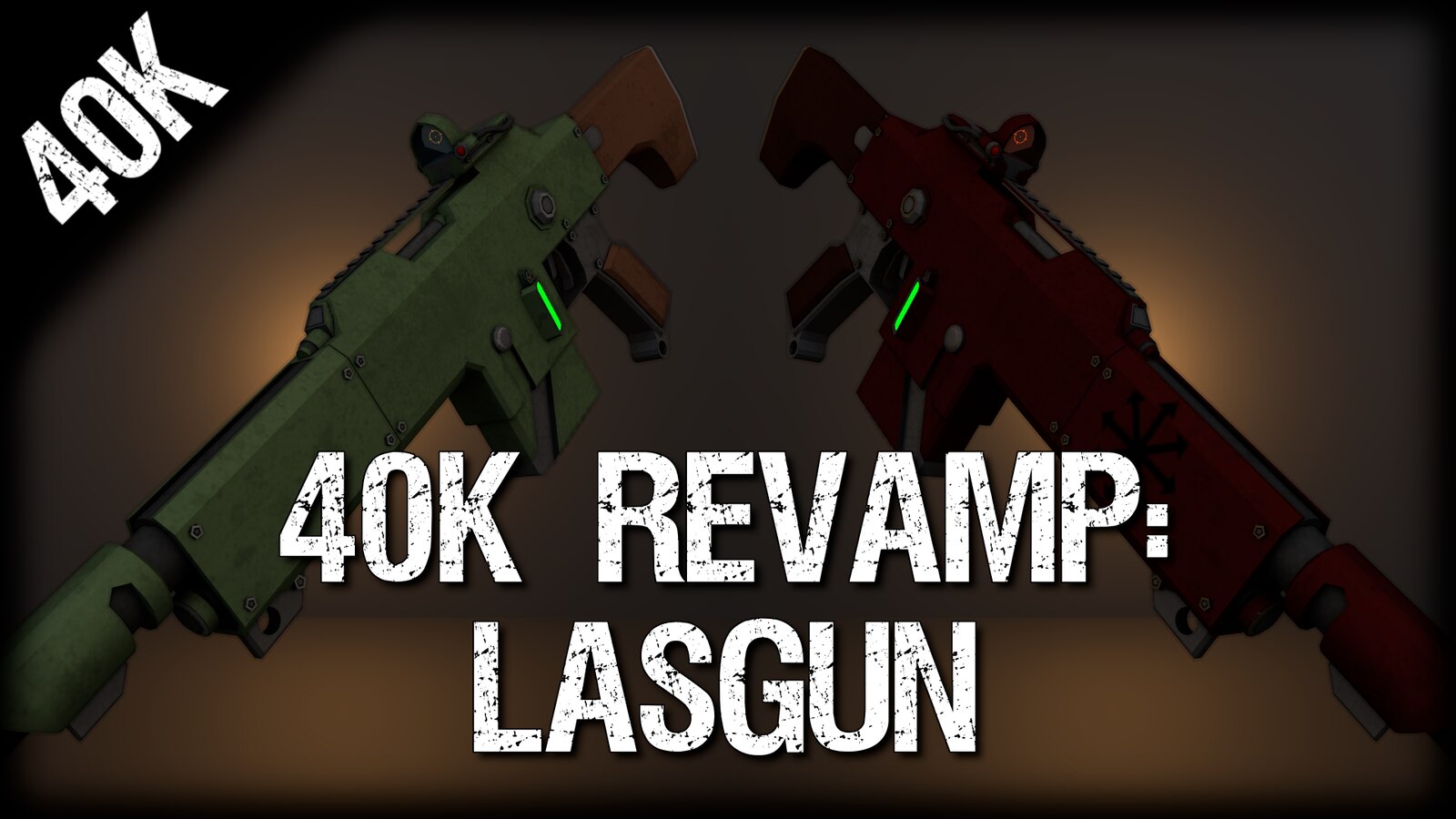
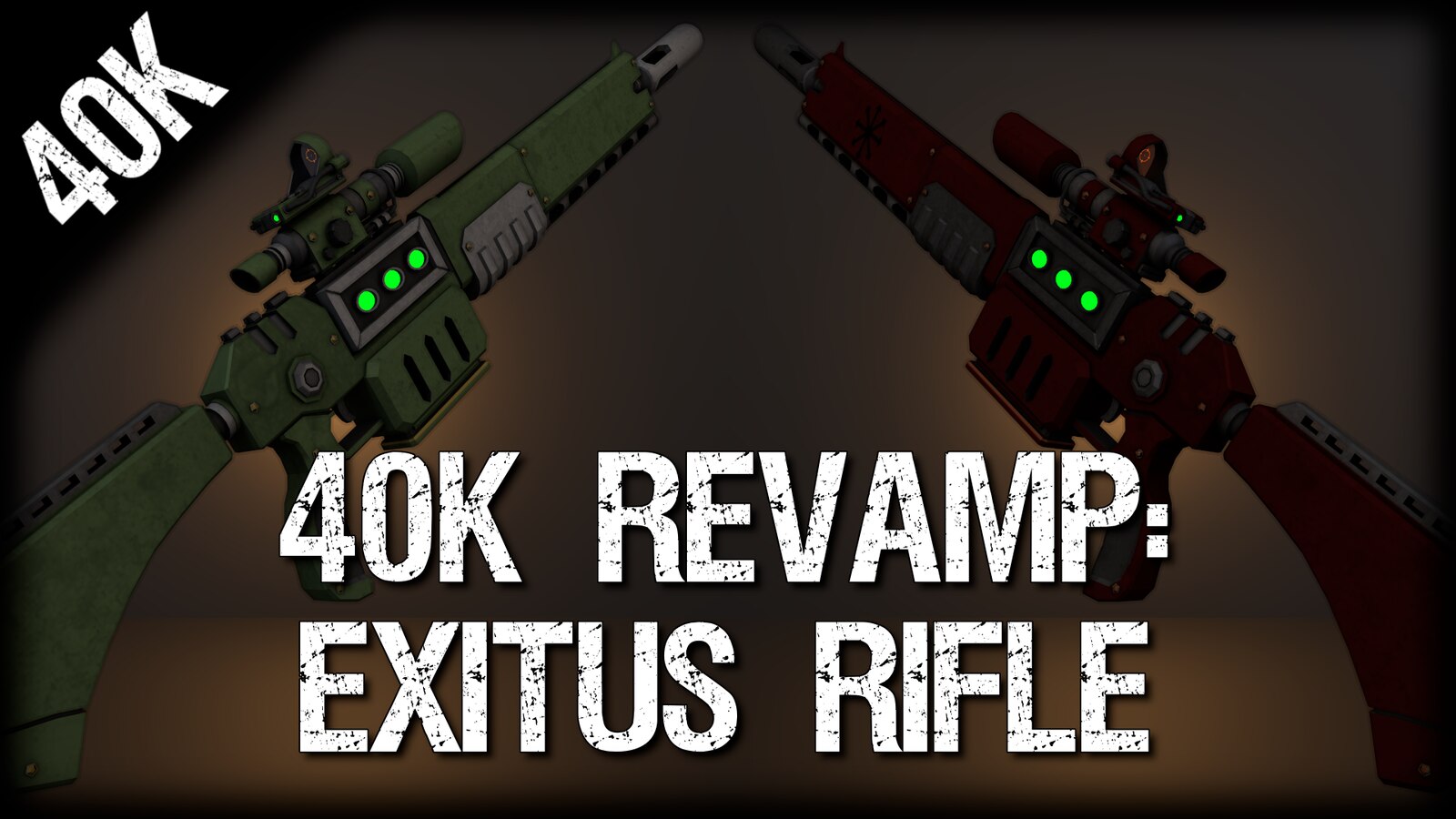
The later 40K REVAMP items show that direction more clearly. They were smaller than the collection as a whole, but more disciplined in presentation and scope. The Lasgun and Exitus Rifle pages were focused Workshop releases with clear content lists, bug-report instructions, community links, and collection links.
The collection also grew through other creators. I am keeping this page focused on my own work, but kbarwich66 deserves a direct mention. He was a close contributor, especially around the Imperial Knight work, and that collaboration became the strongest example of what the 40K project could become.
What I created
Across the 40K work I made and maintained a broad set of Ravenfield content:
- Imperial Guard, Skitarii, Tau, Ork, Necron, Astartes, and other faction-related skins or older legacy packs,
- weapon packs such as lasguns, hellpistols, combat knives, melta bombs, Ork weapons, bolter-related legacy items, and later 40K REVAMP releases,
- mutators such as Ork Boi attribute and voice behavior,
- vehicles and large set pieces, including older Baneblade, Valkyrie, Thunderbolt, Marauder, and Tau battlesuit-related work,
- collection management, descriptions, Discord/community links, bug-report loops, and Steam Workshop publication.
Not every item aged well. Some were explicitly marked as legacy because they could no longer be maintained due to lost files or outdated implementation. That matters in a portfolio context because it shows the real production problem: a modding career is not just output, it is file management, version drift, player support, and deciding what to archive.
The Imperial Knight collaboration
The Imperial Knight Paladin: Terryn’s Grieve was the 40K project’s high point for me. It was not just another vehicle slot replacement. It was a large, performance-heavy battlefield machine with custom models by kbarwich66 and a combined implementation effort around sounds, particles, tracers, textures, HUD work, animations, and scripted behavior.
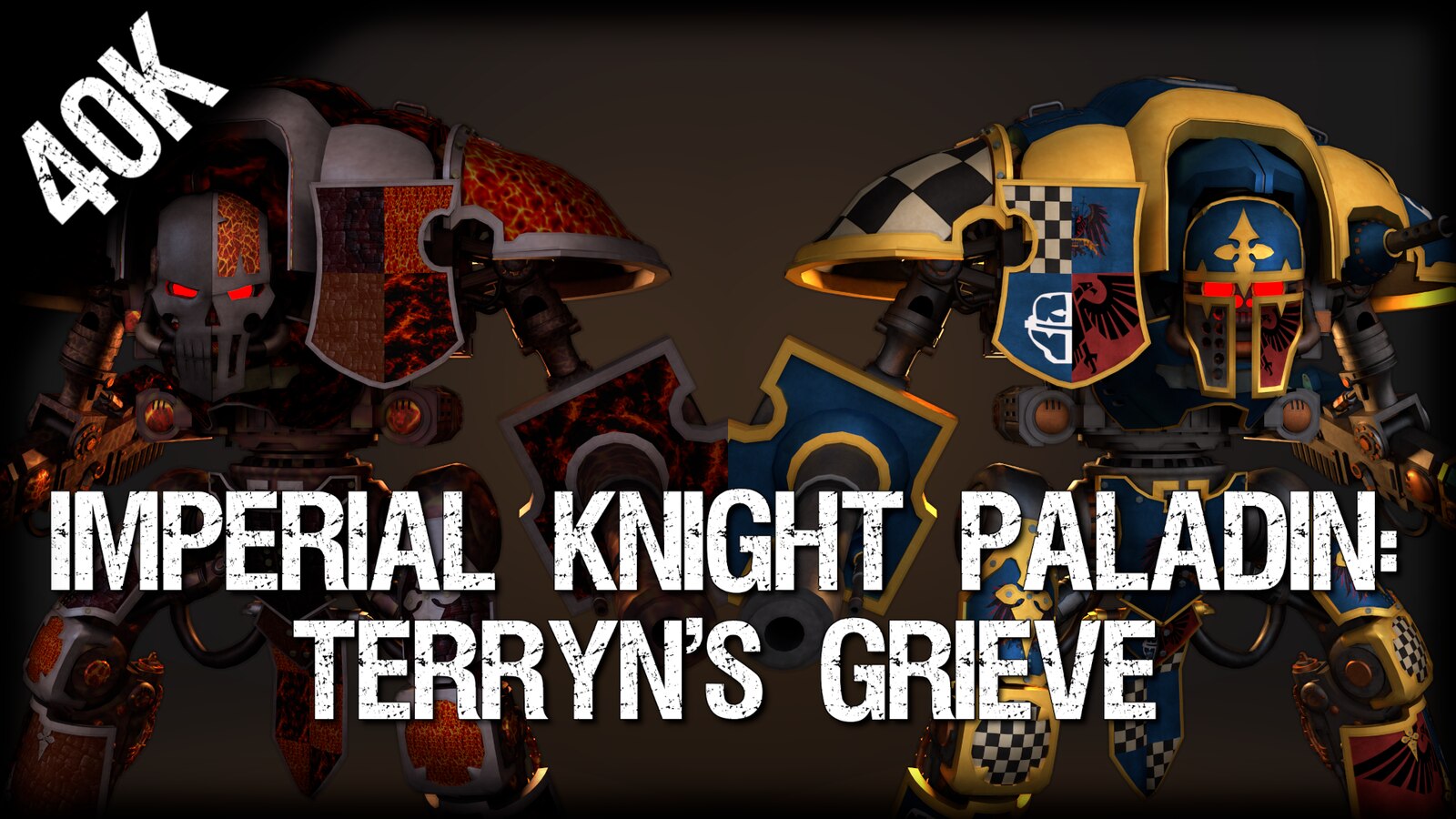
The Knight needed movement controls, sprint behavior, animation interruption, weapon aiming, a second-seat shoulder weapon, a chainsword, a heavy battlecannon, and an ion shield that reacted to lock-on weapons. The Workshop page also warned players that the vehicle was performance heavy and might not behave correctly on every vanilla or custom map.
That warning says a lot about the project. The ambition was real, but the environment was messy. Ravenfield modding gave us the freedom to push a huge machine into the game, while also forcing us to handle map compatibility, performance, player expectations, and the limits of the tools.
Technical notes
The workflow moved through Blender for modeling and asset preparation, Gimp for textures, Audacity for sound edits, Unity and the Ravenfield Tools Pack for implementation, and Steam Workshop for releases. Scripted behavior and custom vehicle logic used the Ravenfield modding surface available at the time.
Steam Workshop became both distribution and production pressure. Ratings, comments, subscriptions, bug reports, and Discord feedback made the work public immediately. That helped me improve faster, but it also meant that every broken update, missing file, incompatible map, or unfinished promise had an audience.
The useful lesson was that scope has a maintenance cost. The more a mod behaves like a product line, the more it needs structure: naming, versioning, archive decisions, documentation, support channels, and clear boundaries around what is still active.
Outcome
This project is now archived. I do not treat it as an active 40K modding effort anymore. It belongs to an earlier stage of my Ravenfield career, where I was learning how to create, publish, collaborate, and maintain public game content at a scale I had not handled before.
The 40K work still matters to my portfolio because it was the first project that made me think like a production owner instead of only a modder. It taught me where my strengths were, where my pipelines were weak, and why later projects needed clearer scope, better source-file discipline, and a healthier boundary between hobby output and long-term professional focus.